A hardiness zone refers to a map created by the USDA.
This map gives growers, whether professional or recreational, a way to determine if the perennial plants we grow can survive the lowest average temperatures in our area.
In simple terms, it helps answer one question:
“Will this plant survive my winter?”
For example, a traditional avocado tree can only tolerate temperatures around 30–32°F for short periods of time. Because of that, regions like parts of California, Florida, and Hawaii are much better suited for growing them outdoors year-round.
But here is where it gets important.
A state is not just one hardiness zone.
Each state is broken up into multiple zones, and even smaller variations called microclimates, localized areas where environmental conditions differ slightly from the surrounding region.
🌡️Understanding the Zones
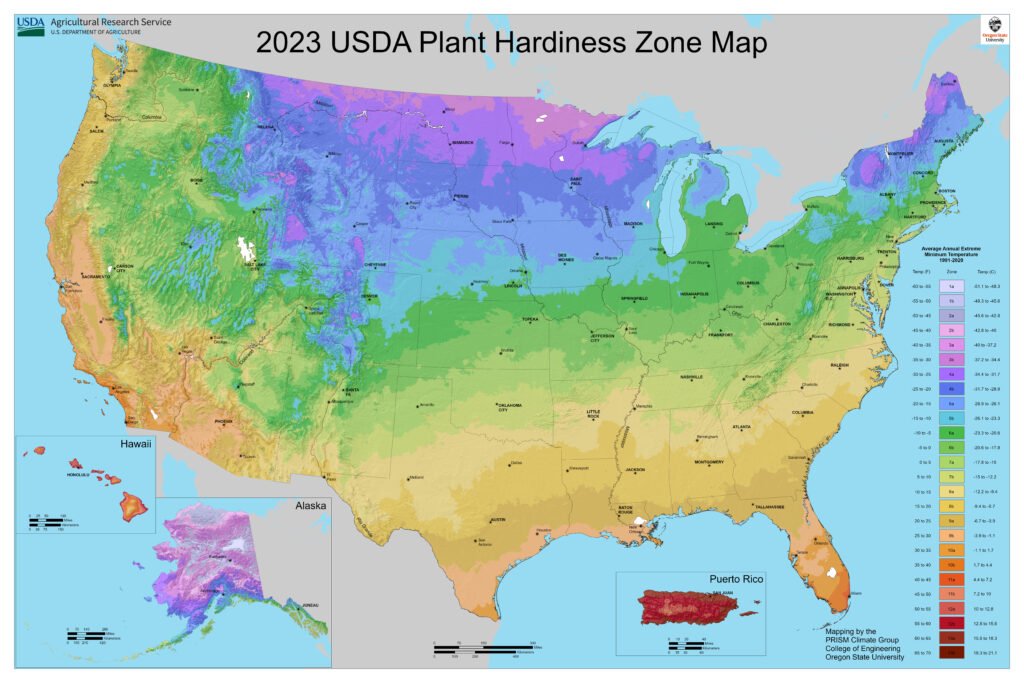
There are 13 hardiness zones in the United States, as defined by the USDA. Each zone represents a 10-degree Fahrenheit range of average annual minimum temperatures.
Each zone is then split into:
- “a” – lower 5 degrees
- “b” – upper 5 degrees
For example:
- Zone 1a: −60°F to −55°F
- Zone 1b: −55°F to −50°F
As the numbers increase, the climate becomes warmer.
📍My Zone (Charlotte, NC)
Let us bring it closer to home.
In North Carolina, there are multiple hardiness zones across the state due to elevation, geography, and climate variation.
Here in the Charlotte area, we are in Zone 7b.
That means our average minimum temperatures can drop to 5-10°F.
So when you follow that same scale from Zone 1 upward, Zone 7b gives you a clear picture of what plants can realistically survive here.
🌳What This Means for Growing
Going back to our earlier example, Zone 7b is not ideal for growing a traditional avocado tree outdoors without protection or modifications.
That doesn’t mean it is impossible, but it does mean you will need:
- containers
- greenhouse protection
- or cold-weather strategies
Hardiness zones do not tell you everything about growing, but they give you a solid starting point.
🗺️USDA Hardiness Zone Map
Below is the official hardiness zone map from the USDA for reference. Use this map to find your growing zone. Click the image to search by zip code on the official USDA site.
No Comments